
Why every solar quote seems to land on a different size
Ask three installers to size a system for the same three-bedroom house and you may get three different answers. One says 3.5 kWp. Another says 4.5 kWp. A third pushes for 6 kWp with a battery bundled in. None of them are necessarily wrong. They are usually starting from different assumptions about your electricity use, your future plans, and how much of your generation they expect you to use directly rather than export.
Getting the sizing decision right matters more than it might seem. An undersized system leaves savings on the table every single day for the next 25 years. An oversized system costs more upfront than it needs to and can take longer to pay back, particularly if a large share of the extra generation ends up exported at a modest rate rather than used in your home.
This guide walks through the actual method behind solar sizing for a typical three-bedroom UK home: how to use your real electricity consumption, how roof space and panel wattage interact, what local conditions change, and how future plans like an EV or heat pump should factor into the decision.
Step one: find your actual electricity consumption
Every credible sizing method starts in the same place: your real annual electricity usage, not a generic average. A three-bedroom house is not a fixed unit of consumption. A retired couple working from home all day uses electricity very differently to a family of four who are mostly out until early evening, and the sizing conversation should reflect that.
The average three-bedroom UK home uses somewhere between 2,700 and 3,100 kWh of electricity per year, according to typical industry benchmarks. That figure is a reasonable starting point if you have no better data, but your own bills or smart meter app will give you a far more accurate number, and it is worth the ten minutes it takes to look it up before getting quotes.
| Household profile | Typical annual consumption | Notes |
| Low-use, 2 to 3 people, mostly out during the day | 2,200 to 2,700 kWh | Below the three-bed average |
| Typical three-bedroom household | 2,700 to 3,100 kWh | Standard industry benchmark |
| Higher use, family home, more daytime occupancy | 3,200 to 4,000 kWh | Above average, common with younger children at home |
| With an electric vehicle charged at home | Add roughly 1,500 to 2,000 kWh | Significant additional load to size around |
| With an air source heat pump | Add roughly 3,000 to 3,200 kWh | Roughly doubles total household consumption |
If you are moving into a new property or do not yet have a full year of billing history, ask your supplier for the previous occupant’s annual usage figure, or use the consumption averages above as a starting point and adjust for your household’s specific circumstances.
Step two: convert consumption into a system size
Once you know your annual consumption in kWh, the next step is translating that into a system size in kilowatts-peak (kWp), the standard measure of a solar array’s maximum generating capacity under ideal conditions.The simplest version of the calculation uses the UK’s average solar irradiance figure of roughly 850 kWh per kWp per year. Divide your annual consumption by 850 and you get a rough kWp figure. For a household using 3,000 kWh annually, that works out to approximately 3.5 kWp.
The basic sizing formula
Annual electricity use (kWh) ÷ 850 = approximate system size needed (kWp)
Worked example: 3,000 kWh ÷ 850 = 3.5 kWp
In practice, most installers round this up rather than down, for two reasons. First, system losses through the inverter, cabling, and connections typically reduce real-world output by 15 to 25% compared to the theoretical maximum, so a system sized exactly to your consumption on paper will usually underperform that figure once installed. Second, sizing slightly above your current consumption builds in headroom for rising electricity use, whether from a future EV, a heat pump, or simply consuming more electricity than you do today.
This is why a 4 kWp system, generating roughly 3,400 to 4,200 kWh per year on a south-facing roof, has become the de facto standard size for a three-bedroom UK home, even though the average three-bed household’s raw consumption figure would suggest something closer to 3.5 kWp on paper.
Step three: check your roof can actually take it
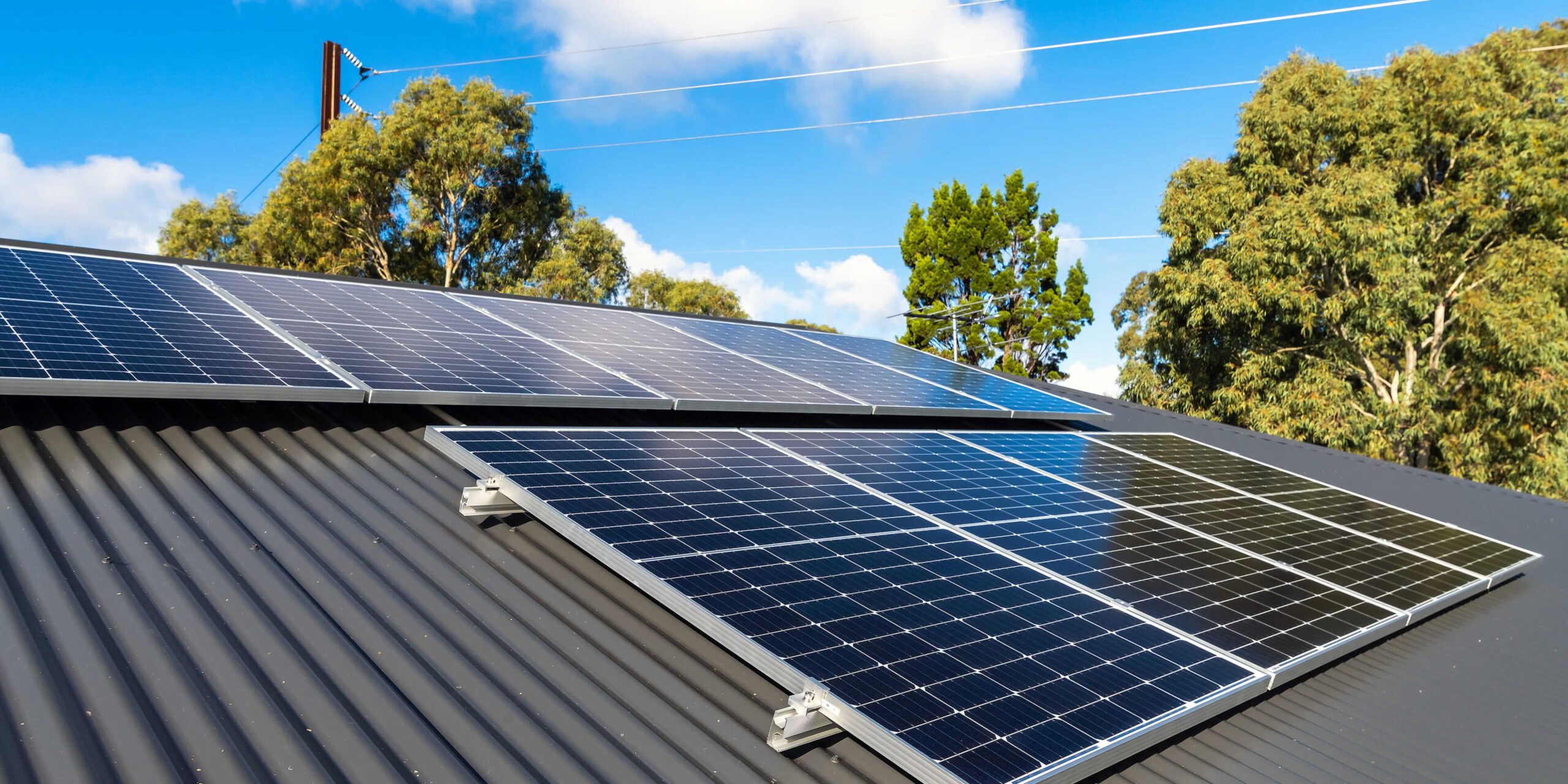
A 4 kWp system needs genuine roof space, and this is the step that occasionally derails the sizing decision entirely. Most domestic panels in 2026 are rated between 400 and 450 watts and measure roughly 1.7 to 2.0 square metres each.
| System size | Approximate panel count | Roof space required |
| 3 kWp | 7 to 8 panels | 12 to 16 m² |
| 4 kWp | 10 to 12 panels | 17 to 22 m² |
| 5 kWp | 12 to 14 panels | 21 to 26 m² |
| 6 kWp | 14 to 16 panels | 25 to 30 m² |
A standard three-bedroom semi-detached or terraced house in the UK typically has between 25 and 40 square metres of usable south-facing or near-south-facing roof, which comfortably accommodates a 4 kWp system with room to spare in most cases. Hipped roofs, dormer windows, chimneys, and roof vents all eat into usable space and need to be accounted for in a proper site survey rather than estimated from the kerb.
Panels also need clearance around the edges of the roof and small gaps between each panel, typically around 30 to 40 centimetres from roof edges and a few centimetres between panels, which reduces the effective usable area below the raw roof measurement.
Step four: adjust for roof orientation and local conditions
The 850 kWh per kWp irradiance figure used in the basic calculation assumes a south-facing roof at an optimal 30 to 40 degree pitch with no shading, in a broadly average UK location. Real roofs rarely match that exactly, and the adjustment can meaningfully change the system size needed to hit your target generation figure.
Orientation
South-facing roofs perform at the 100% baseline used in most calculators. East or west-facing roofs typically produce 15 to 20% less for the same system size, which means you may need a slightly larger system, perhaps 4.5 to 5 kWp instead of 4 kWp, to hit the same generation target. North-facing roofs lose 30% or more and are generally not recommended unless there is no practical alternative.
Geography
Solar irradiance varies meaningfully across the UK. The south of England, East Anglia, and parts of Wales receive noticeably more annual sunshine than the north of England or Scotland. A 4 kWp system might generate 4,000 to 4,200 kWh in the south of England but closer to 3,200 to 3,600 kWh in northern Scotland. This does not make solar a poor choice further north, it simply means the same system size produces somewhat less, which a proper quote should reflect honestly rather than using a single national average figure.
Shading
A chimney stack, a mature tree, or a neighbouring building that shadows even a portion of the array for a few hours a day can meaningfully reduce whole-system output, particularly with standard string inverters where shade on one panel can affect the output of the whole string. A proper site survey should include a shading assessment specific to your roof, not a generic estimate.
Step five: size for tomorrow, not just today
This is the step most basic online calculators skip entirely, and it is often where the real sizing decision should be made. Your electricity consumption in five or ten years is unlikely to look like it does today, and retrofitting a larger system later is rarely as straightforward or cost-effective as getting the size right from the outset.
| Future addition | Typical extra annual consumption | Sizing implication |
| Electric vehicle, charged at home | 1,500 to 2,000 kWh | Consider sizing up by roughly 1 to 1.5 kWp |
| Air source heat pump | 3,000 to 3,200 kWh | Often justifies a significantly larger system, 6 kWp or more |
| Home office, increased daytime occupancy | Variable, often 300 to 600 kWh | Improves self-consumption more than it changes sizing |
| Battery storage added later | No change to consumption | Improves self-consumption of existing generation rather than requiring a larger array |
Adding panels to an existing system later is technically possible but often more expensive and complicated than it sounds. It frequently requires a new or upgraded inverter, fresh approval from your local network operator, and panels that match the specification of your existing array closely enough to perform well together, which can be difficult if your original panels are no longer in production. If there is a realistic chance you will want an EV or a heat pump within the next five to ten years, it is usually more cost-effective to size for that now.
Common sizing mistakes worth avoiding
- Sizing purely from a generic per-bedroom rule of thumb without checking actual consumption. House size is a reasonable starting point, but two three-bedroom homes with very different occupancy patterns can have meaningfully different real electricity needs.
- Accepting a quote based on average UK irradiance without adjustment for your specific roof orientation and region. A system sized for a south-facing roof in East Anglia will underperform expectations on a partially shaded east-facing roof in Scotland.
- Ignoring future plans entirely. Sizing strictly to today’s consumption with no headroom for an EV or heat pump often means a costly second project a few years later, rather than a single well-sized installation now.
- Treating exported surplus as automatically wasteful. A moderately oversized system that exports surplus generation under a competitive export tariff can still be a sound financial decision, particularly with a battery to capture more of that surplus for self-consumption first.
- Skipping the roof space and structural check until after the system size has already been agreed. Confirm your roof can physically accommodate the proposed system before treating any quote as final.
Ready to find your perfect fit?
Contact Apollogrid today. We’ll look at your energy goals and help you calculate the exact system size for your needs.